

The Spring Events Worth Building a Trip Around
Six things happening in the world right now that your kids will never forget.

Cherry blossoms, water fights, flamenco, and the most important week in Washington DC in 250 years.
Most family travel starts with a destination. Pick somewhere, figure out what to do when you get there. That works fine. But some of the best trips start the other way — with something happening in the world that you build around. A specific event, a specific week, a window that closes and doesn’t come back until next year.
Right now, spring is delivering six of them. Here’s what’s on.
What’s happening this spring, and where
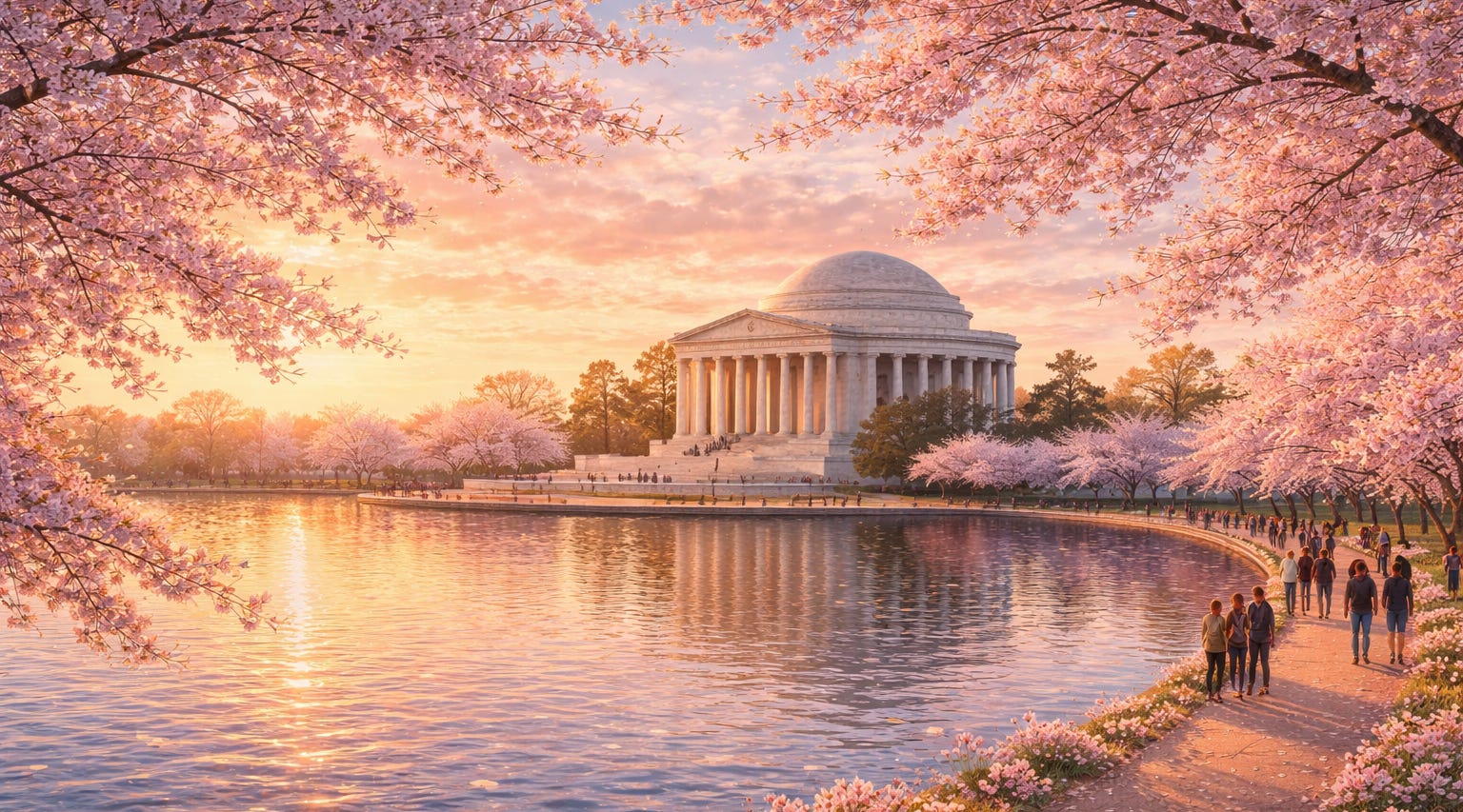
🇺🇸 Washington DC — Cherry Blossoms + America’s 250th Birthday National Cherry Blossom Festival: March 20 to April 12
This is a once-in-a-generation combination. The cherry blossoms are at or near peak bloom right now around the Tidal Basin, and this year’s festival overlaps with America’s 250th anniversary celebrations. Japan gave the US 3,000 cherry trees in 1912. This year Japan is giving 250 more.
The Smithsonian museums are free, as always. The National Museum of American History is opening a new exhibition this spring built around 250 objects that tell the American story, including the desk Thomas Jefferson used to draft the Declaration of Independence. Mount Vernon, just outside the city, has a new George Washington exhibit opening now.
For families visiting this week and next, the Blossom Kite Festival is March 28 on the Washington Monument grounds, free and open to all ages. Petalpalooza on April 4 runs all day with live music, art installations, and fireworks over the Anacostia River at 8:30pm. The Cherry Blossom Parade is April 11.
Every museum on the National Mall is free. Every monument is free. Peak bloom lasts about a week, so if you’re going, go soon.
Check the event schedule.
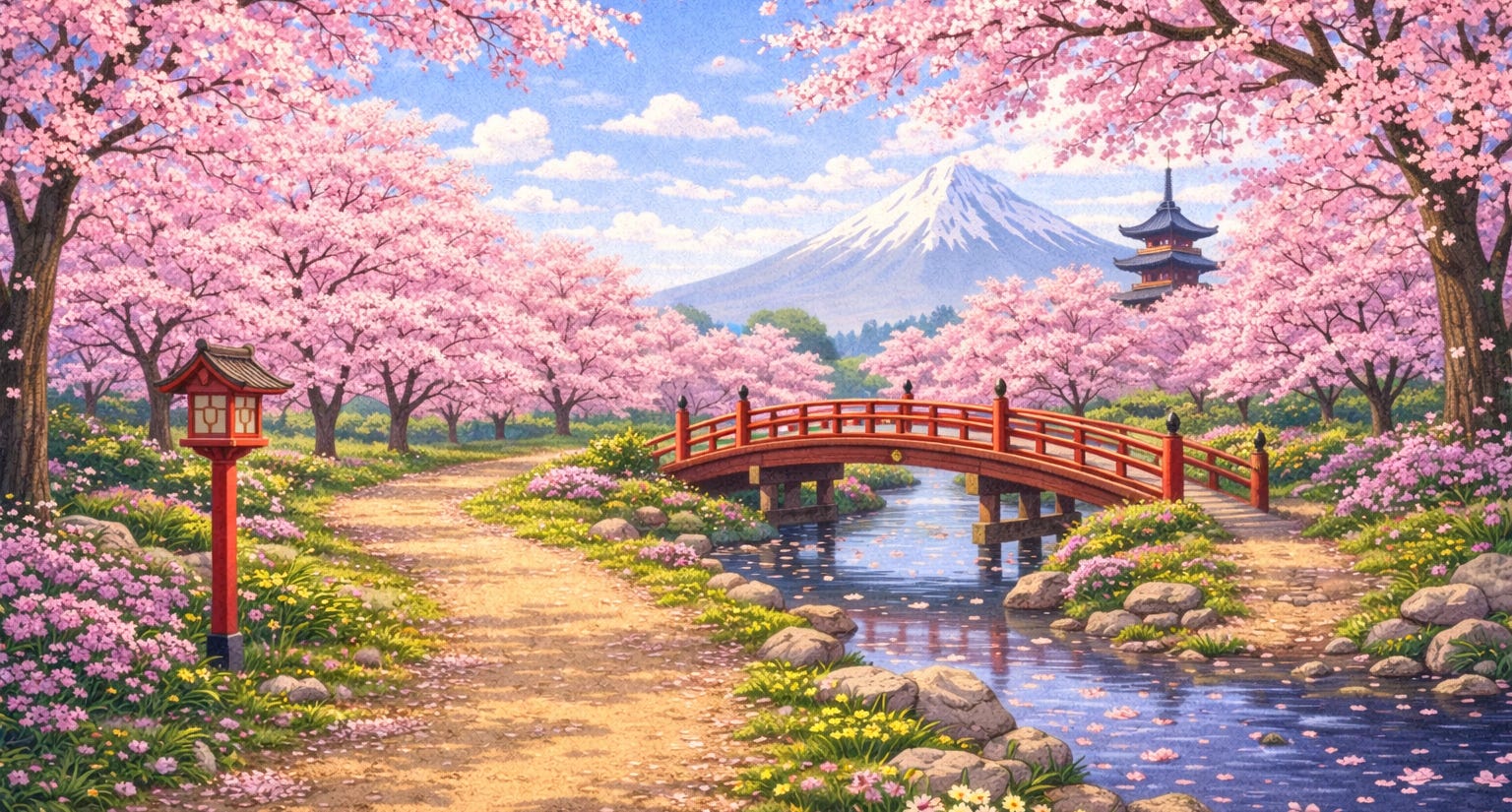
🇯🇵 Japan — Cherry Blossom Season Tokyo peaked this week. Kyoto: peak around April 4. Northern Japan: through late April.
Tokyo’s cherry blossoms hit full bloom around March 27. Kyoto peaks around April 4, and the sakura front keeps moving north through April, reaching Hokkaido in late April. That gives families a six-week window to catch it somewhere in the country.
The Japanese have a word for sitting under the blossoms: hanami. It translates roughly as “flower viewing” but in practice it means spreading out a picnic under a canopy of pink petals while the whole country celebrates together. Ueno Park in Tokyo and Maruyama Park in Kyoto are the classic spots.
The blossoms last about ten days before they fall. That brief window is actually the point. The Japanese see the sakura as a reminder that beautiful things don’t last. It’s a surprisingly useful thing to talk about with kids.
Japan Blossom Forecast
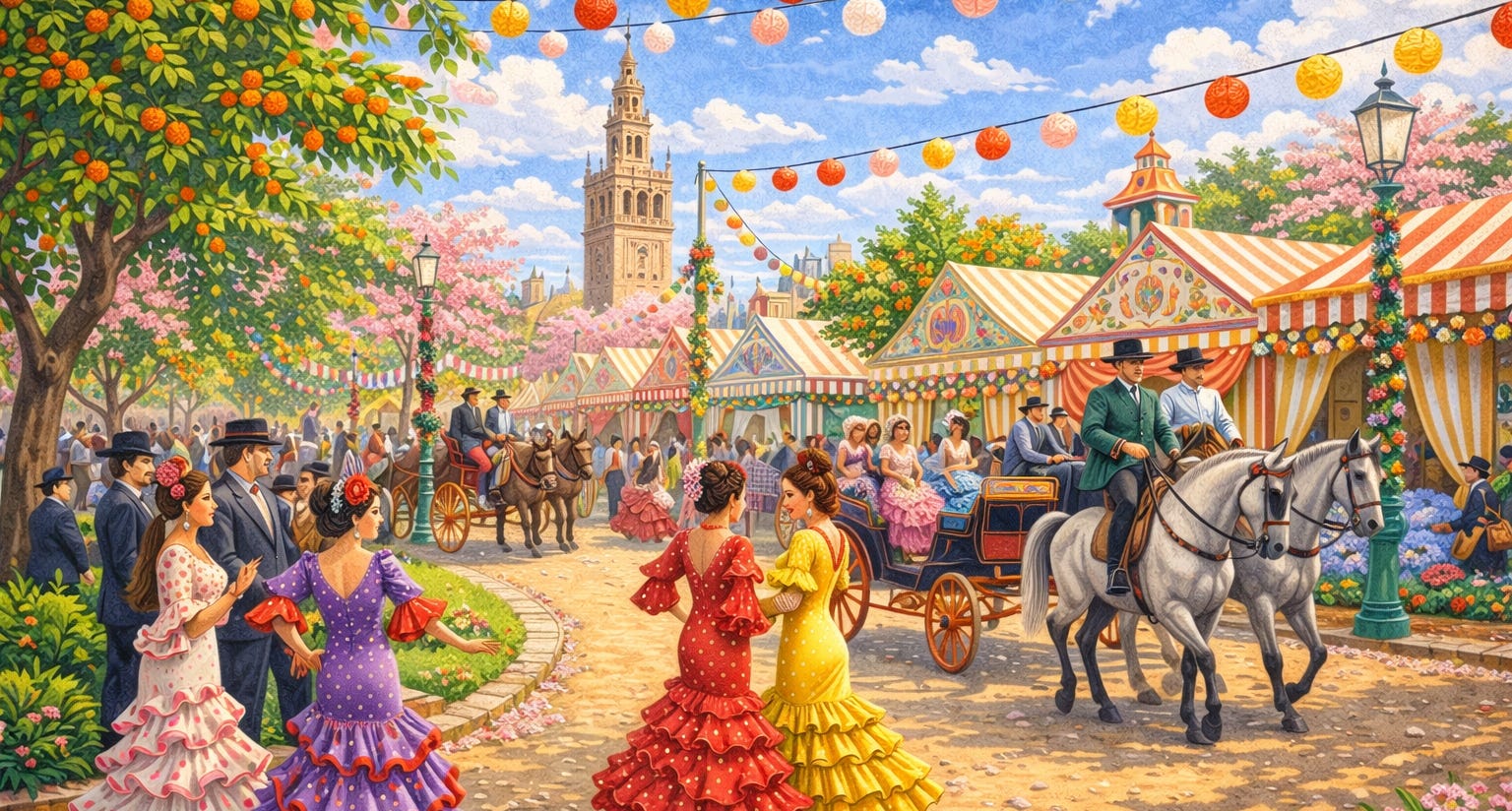
🇪🇸 Seville, Spain — Feria de Abril April 21-26
Two weeks after Easter, Seville stops entirely and throws a six-day party. Over 1,000 striped tents go up across a 450,000-square-metre fairground. The entrance gate is lit by 104,000 LED bulbs. Six hundred Andalusian horses parade through the city every afternoon in full traditional dress. Flamenco plays in every tent from noon until the early hours.
The Feria began in 1847 as a cattle market. The party aspect gradually took over the business aspect, and it has been this way ever since.
Most tents are private, belonging to Seville families and clubs. But each of the city’s six districts has a public tent open to everyone, and there is one specifically for visitors. Kids’ flamenco classes run daily for €5. The fairground amusement park, called Calle del Infierno, has 400 attractions.
Book accommodation months ahead. Seville fills up completely.
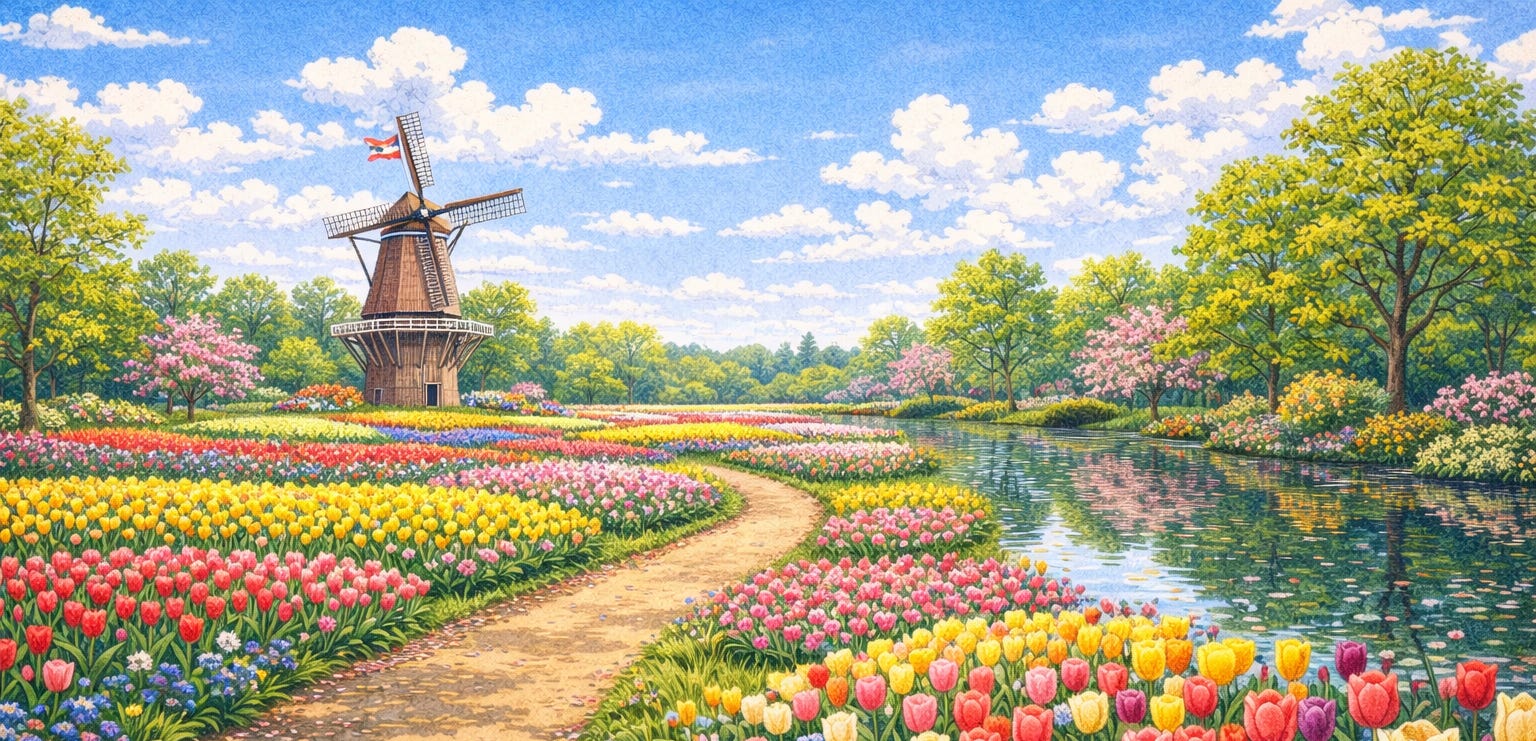
🇳🇱 The Netherlands — Keukenhof and King’s Day Keukenhof: March 19 to May 10. King’s Day: April 27.
Do both in one trip.
Keukenhof is 32 hectares of garden outside Amsterdam planted with seven million bulbs across 800 tulip varieties. It opens for eight weeks a year and then closes. Peak bloom is mid-April. Tickets are timed and sell out, book ahead at keukenhof.nl.
Then stay for King’s Day on April 27. The entire Netherlands wears orange, every city becomes a street party, and children set up stalls on pavements across the country to sell their old toys. It is entirely normal to buy a stranger’s second-hand Lego on the street in Amsterdam. The king tours a different city each year by boat, greeting the crowds.
We’re hoping to catch the end of the Tulip season this year.
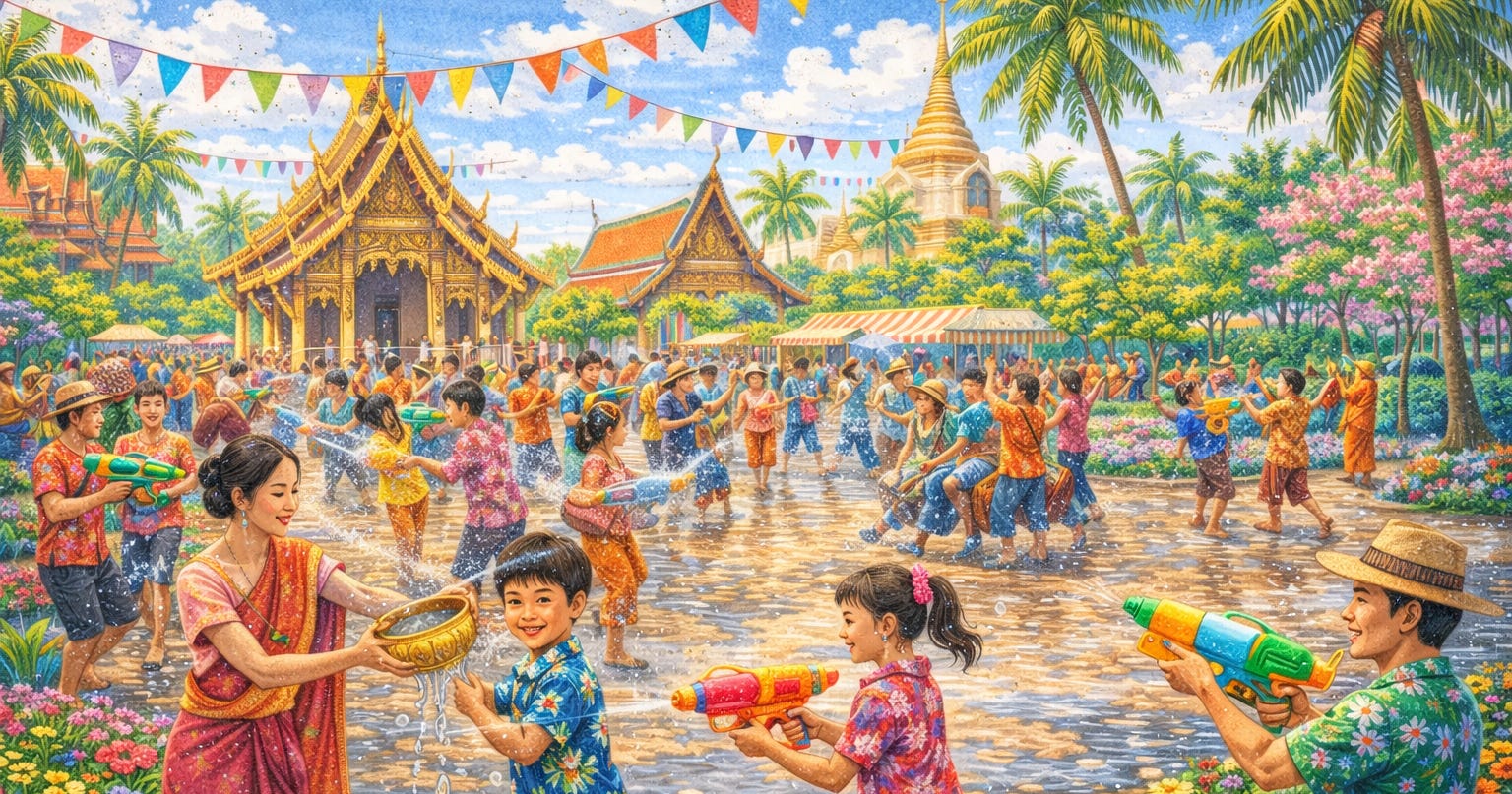
🇹🇭 Thailand — Songkran April 13-15
Songkran is the Thai New Year and the world’s largest water fight. On April 13, the entire country arms itself with buckets, hoses, and water guns and spends three days soaking strangers in the street. In 2024, UNESCO added it to the list of intangible cultural heritage of humanity.
The tradition is genuinely old. Water represents purification, washing away the previous year’s bad luck. The traditional version involves gently pouring scented water over the hands of elders to show respect and ask for their blessing. The modern version in Bangkok involves industrial-scale water warfare on Khao San Road.
Chiang Mai is the most celebrated city for Songkran, with the ancient moat providing an endless water source for the surrounding streets. Bring a waterproof bag for your phone. Everything gets wet.
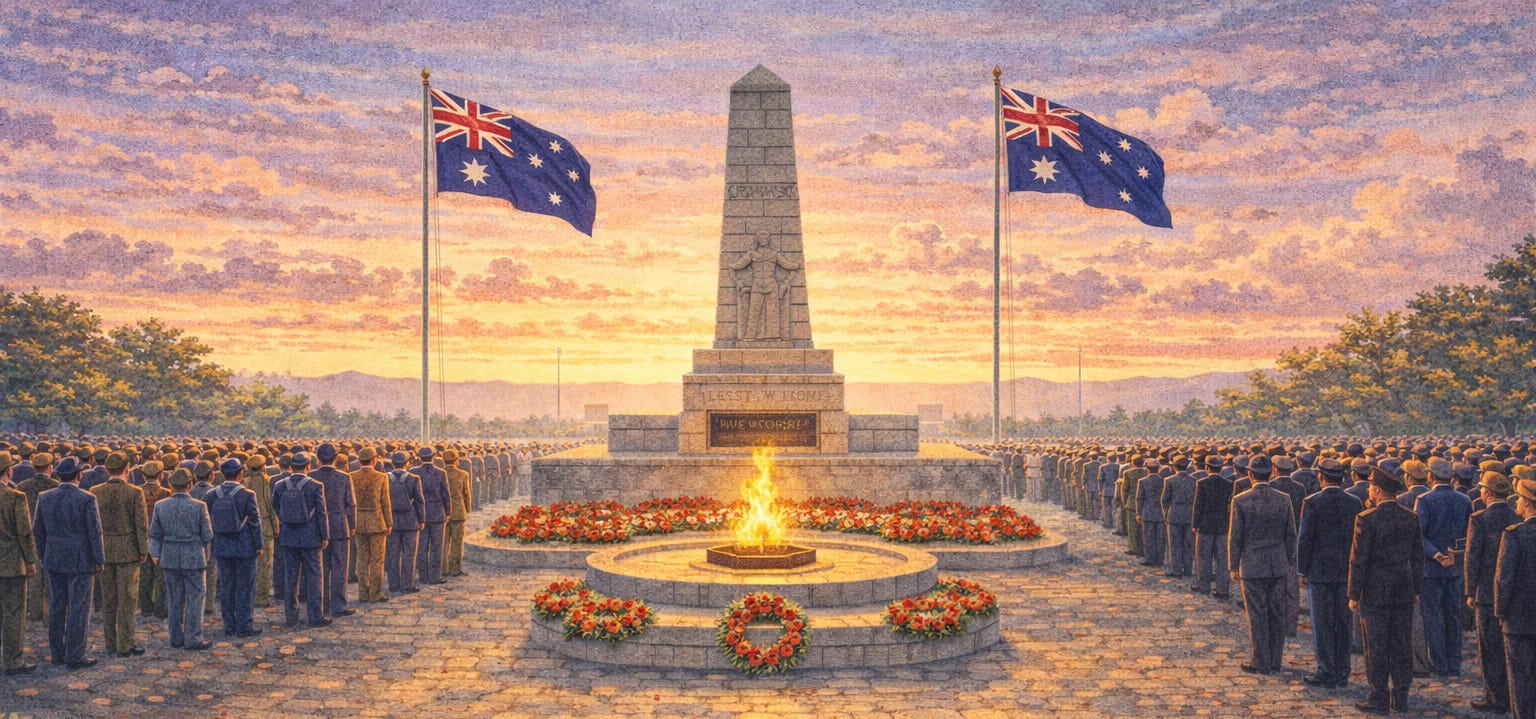
🇦🇺🇳🇿 Australia and New Zealand — Anzac Day April 25
Every year, before sunrise on April 25, dawn services begin across Australia and New Zealand. The timing mirrors the original landing at Gallipoli in 1915, when Australian and New Zealand troops came ashore in the early morning darkness as part of a campaign that lasted eight months and cost more than 10,000 Anzac lives.
The campaign failed militarily. The Gallipoli landings did not achieve their objectives. But the courage shown by Australian and New Zealand soldiers shaped both nations’ sense of who they are, and the day has been commemorated ever since.
Dawn services are held in every Australian and New Zealand city, town, and suburb. Families bring children. Veterans march. Wreaths are laid. The Last Post is played. If you are in either country on April 25, it is worth going.
Gallipoli, where the original 1915 landing took place, is on the western coast of Turkey. Families who want to visit the site itself can attend the Dawn Service there, but it requires free attendance passes registered well in advance. Details at dva.gov.au.
Pocket History — tell your kids this one tonight
The cherry trees around the Tidal Basin in Washington DC almost didn’t survive. The first shipment arrived from Japan in 1910, but US inspectors found they carried insects and disease. The entire shipment of 2,000 trees was burned on arrival. Japan sent a second shipment in 1912. Those are the trees blooming in DC right now.
This Weekend
Peak bloom at the DC Tidal Basin is coming this week. If you’re within driving distance and haven’t gone, this weekend may be the last good window before the petals fall. The Blossom Kite Festival on the Washington Monument grounds is Saturday March 28, free, all ages, no tickets needed.
In the App
If any of these trips are on your radar, DuckAbroad is worth downloading before you go.
The app has history and stories for over 350 destinations around the world, so kids can read about a place before they arrive, not just stare at a plaque when they get there. They can collect stamps and stickers as they visit, keep a travel journal, and track everywhere the family has been.
For families who want to go a step further, a handful of Hidden History Hunts are already live, giving kids an actual mission to complete at historic sites. More are coming.
Until next Thursday — Chris
The Weekend History Hunt · You’ve got curious kids. We’ve got the missions.
Great list. I’ve always wanted to visit Japan during cherry blossom season